Walking into this classroom, you get an open, warm, and welcoming feel. It’s laid out with soft colours and lots of materials, including natural ones, around the classroom for interaction. The environment promotes well-being and learning, aligning with the BC ELF.
This classroom has been involved in a pedagogical narration of birds for quite some time, so I’m starting to think of what materials I could bring in to interact with the children that could relate to their bird narration. The educators in the classroom are researchers and collaborators, and I intend to join them on this journey with the children.
I noticed that the children were given the time they needed to transition and/or finish a task or activity. The clock did not completely dictate the children’s timeframe. A child was able to finish what they were doing before cleaning up, as the child wasn’t finished building her structure, and got frustrated with it. The children weren’t on a timeline to eat during snack or lunch. It was a calm environment where inclusiveness, collaboration and co-creation were visible within the first day.
A: “What do spiders eat [Educator 2]?”
S: “Bugs!”
Myself: “What do you think they eat?”
EE: “Worms”
E: “They probably like to eat little egg ladybugs.”
Instead of being in the yard, we went on a walk down by the river. These children have been interested in birds for quite some time and take their time on their walks to notice them and what they’re doing.
Myself: “Do birds use loose feathers to make their nests?”
A & E: “Yes.”
Me: “Do you think it makes the birds comfy and warm?”
Someone: “Yes.”
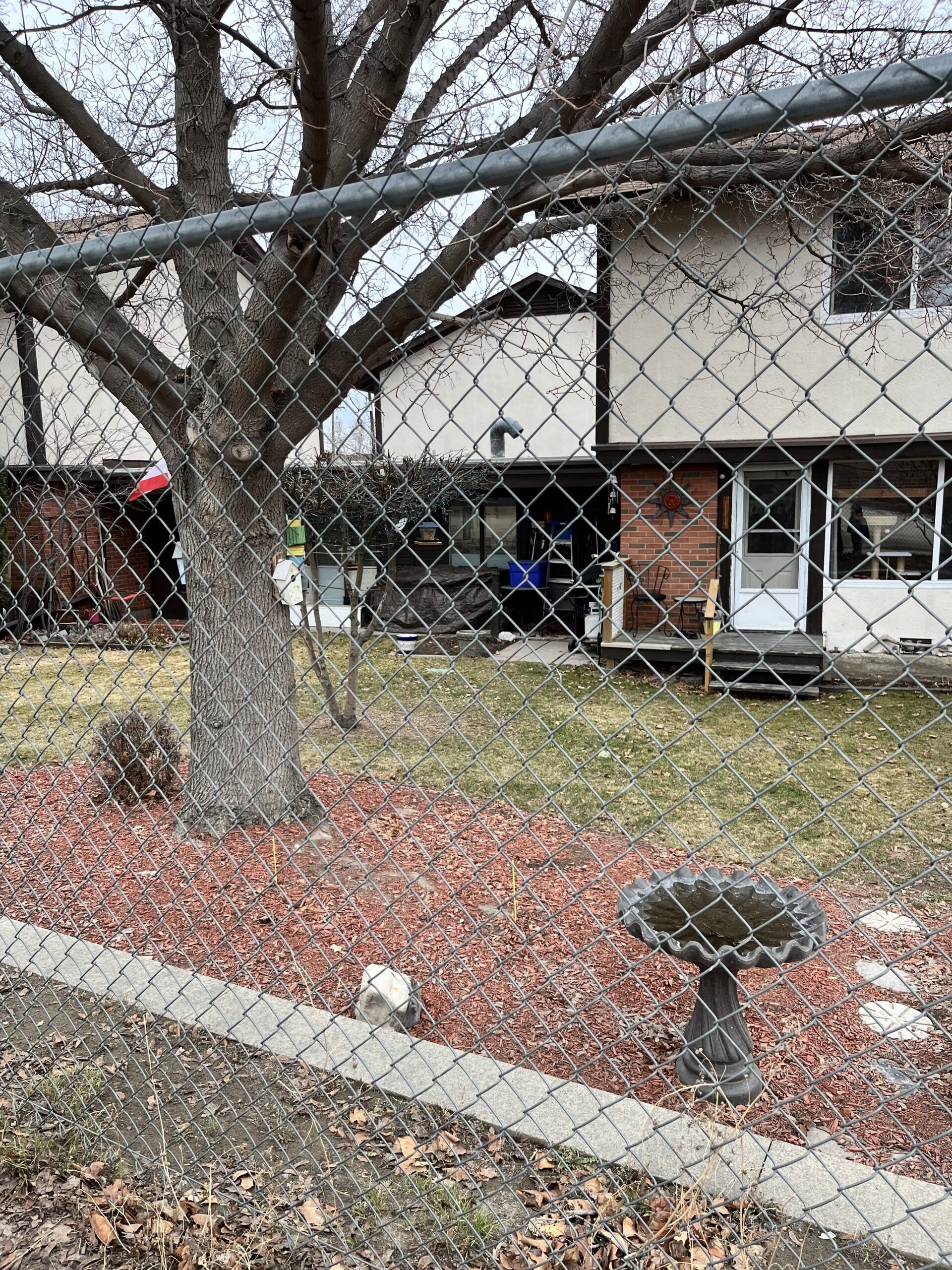
One yard we walked past had a few different bird houses, a bird feeder, and a bird bath. One child suggested the bird bath was actually a pond for ducks.
Educator 2: “Do birds have one feet?”
E: “They have two, actually.”
One boy asked where the water in the river comes from. I replied with: “Where do you think it comes from?” The children began thinking, as I mentioned to Educator 2, that the meeting of the two rivers and where the water comes from could be a very interesting inquiry. Just then, E says, “I figured it out.”
Educator 2: “Nic, [E] said he figured it out already!”
Myself: “You did? Let’s hear it.”
E: “Only some snow turns into water, and it goes from the mountain into the river.”
This here is an example of how the BC ELF sees children as “strong, capable in their uniqueness, and full of potential.”
*later that day*
Z: *eats slowly in small bites* “this is how birds eat!”
Educator 2: “How do you know they eat like that?”
Z: “I saw them eating before, and I saw it on a show on the big screen.”
Educator 1: “Was it a cartoon or was it a real movie?”
Z: “It was a real movie.”
These conversations are making me think of the ways that I can build off the children’s current project about birds and their nests. I came up with a few questions: Do bird nests float? What other animals nest? What are other nests made from?
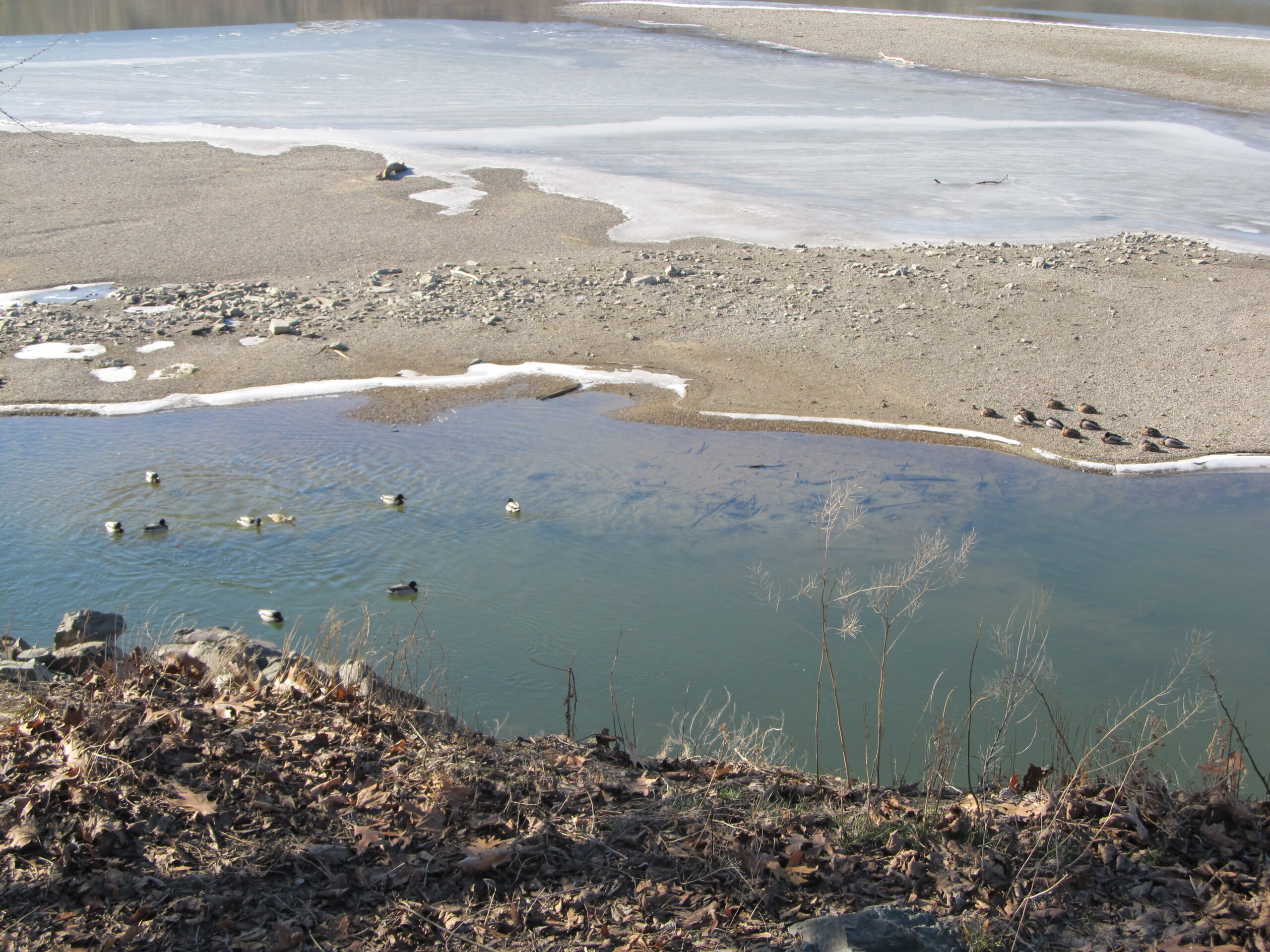
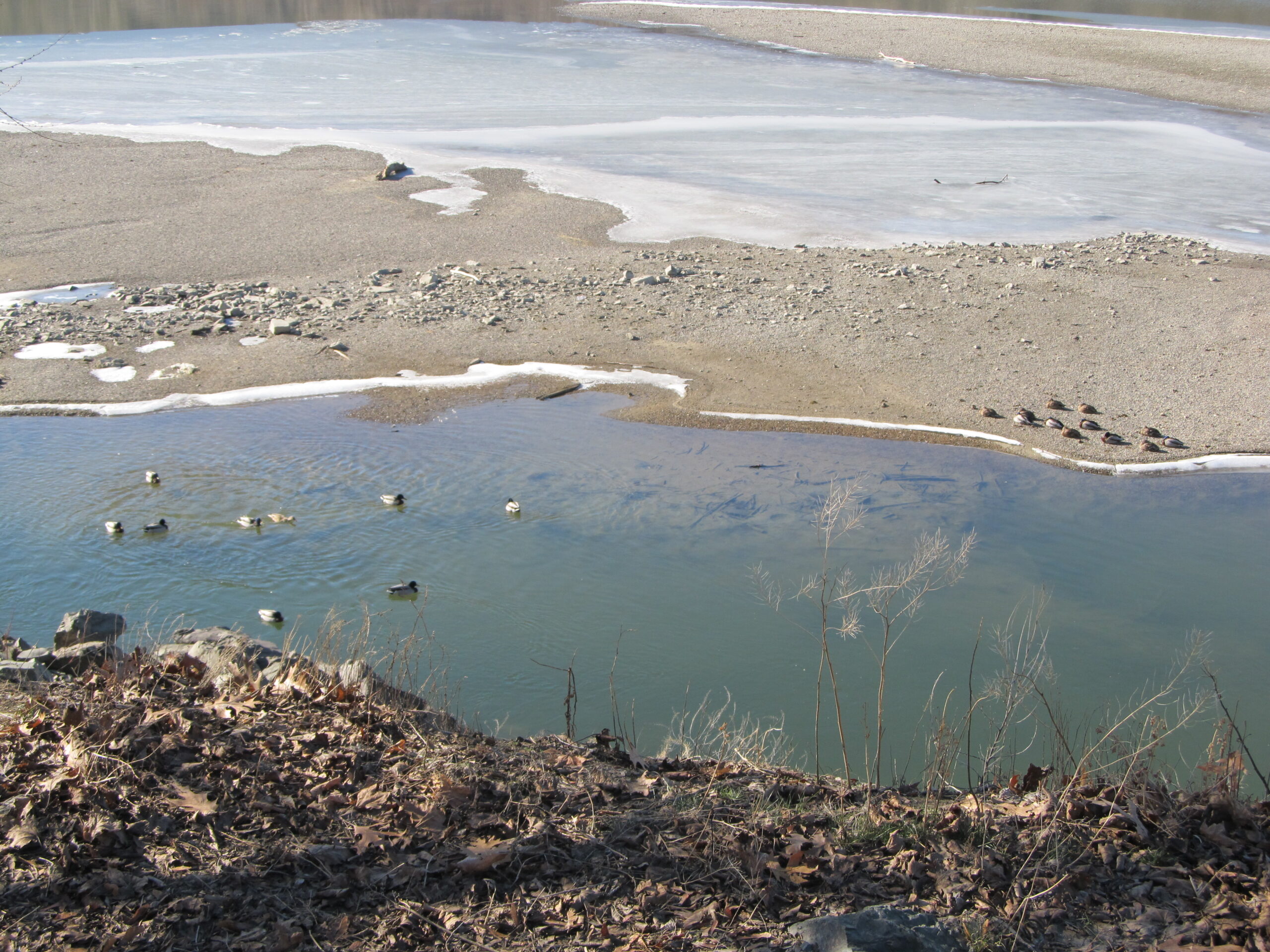
On our next outing, we walked past a group of ducks sitting still on the beach.
Myself: “Now do you see them?”
EE: “I see them!”
Educator 2: What are they all doing together on the beach?”
S: “Maybe they’re sleeping.”
Myself: “You think they’re sleeping? Do the ducks take naps on the beach?
“Yeah.”
“They sleep in their nests, right?”
“Yeah.”
“Maybe they’re hungry.”
Educator 2: “You think they’re hungry? Well, they’re not moving, and they’re all doing the same thing.”
A: “They sleep in their nests.”
Myself: “Yes, N?”
N: inaudible “leh-low”
Myself: “Yellow?”
N: “Not leh-low.”
Myself: “They’re not yellow?”
N: “No.”
Myself: “No, they aren’t.”
*inaudible*
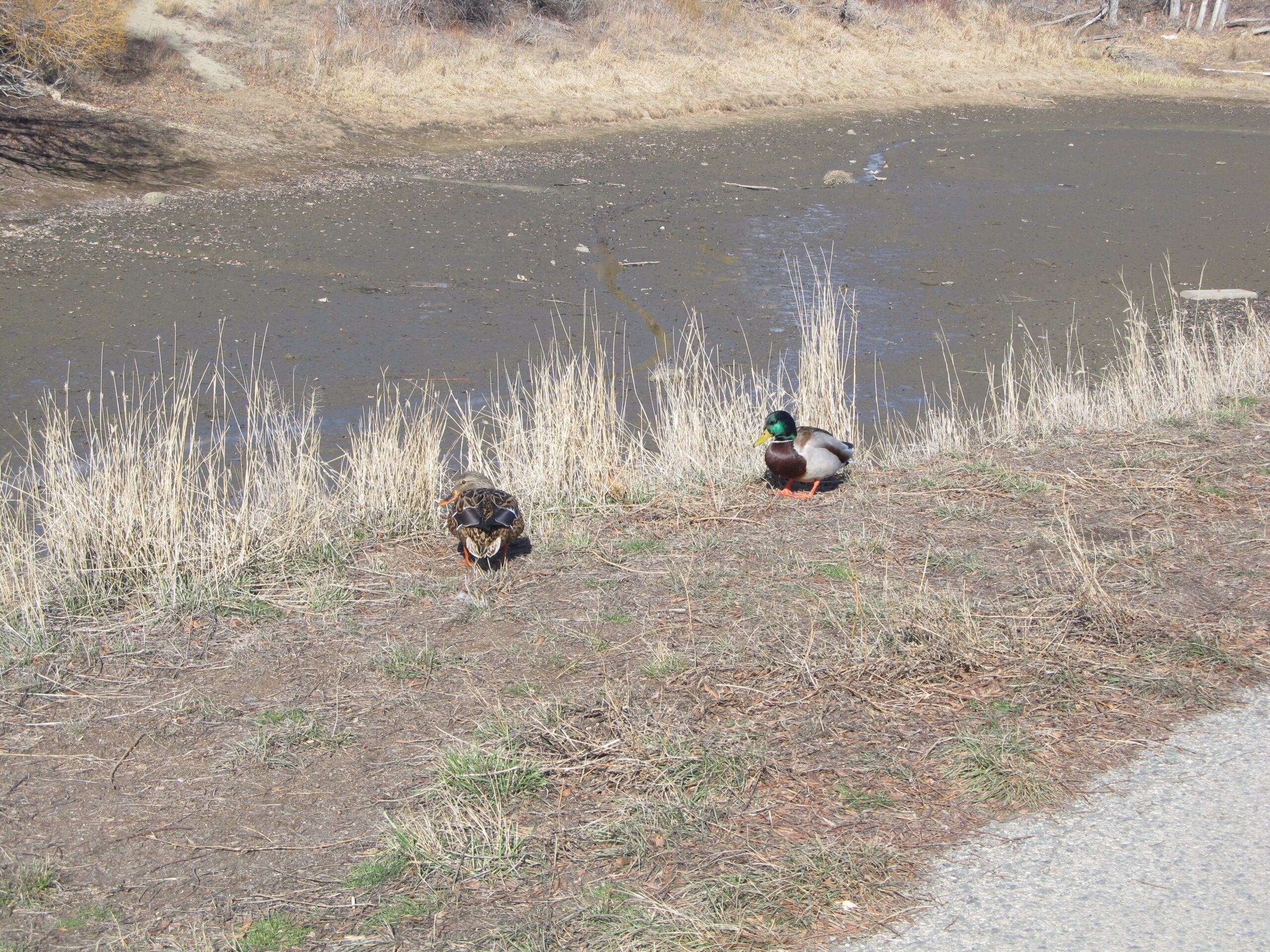
Educator: “We heard the honking of the geese, and L thought it was a train.”
Educator 2: “Oh! What did the group up front say about the ducks sitting down on the beach all together doing the same thing?
Educator: “They thought they were napping. Then we heard honking, and H said, ‘That’s a duck,’ and J said, ‘No, that’s a goose,’ and I said, well, ‘Who says quack and who says honk?’ And they said, “Well gooses go honk, and ducks go quack.’”
Educator 2: “Some of the children at the back said they were sleeping, and some of the children said they were eating. And I said oh but if they’re eating, they’re not moving.”
Educator: “There was one seagull. And L said, ‘Look! A seagull.’ I asked ‘how do you know it’s a seagull?’ and he said, ‘Cause it’s white.”
Myself: “What other birds are white? Are seagulls the only white birds?”
“No.”
Myself: “No? What other birds are white?”
J: “I forget what it’s called.”
Myself: “You forget what it’s called?”
J: “There are two more.”
Myself: “There are two more?
“Geese.”
Myself: “Geese? Are white too?”
J: “No, they’re white and black.”
Myself: “They’re white and black, okay.”
Farther along the walk, we heard another bird before we could see it. The group stopped and looked up into the tree from which the sound seemed to be coming. Some of the children found the bird, and Educator 2 asked what kind of bird it was. J knew right away and said it was a woodpecker.
Back in the classroom, Educator 2 read a book that mentioned a birdsong in it. Educator 2 asked what a birdsong was, and the children said it is a bird that is singing a song. Then EE said, “This is what a bird song is like: ‘Tweet, tweet, tweet.” Educator 2 copied him, and the class tweeted all together like birds.
There was a Re:Materia seminar class in the evening with our mentor educators and our professors. As students taking the lead in our assigned classrooms, we got the opportunity to brainstorm and co-create with our mentor educators about what our plans are for the next couple of weeks. There are a few points that stay relevant within the classroom that relate to birds: what matters to birds? What is a bird’s life like? And what details make a bird? The children have talked about size in different aspects during our walks. Mentioning how big a nest is, how big a boat is, and how big a boat has to be to carry birds versus people. The children have asked questions like what’s in a nest? How does a nest stay in a tree? How do birds stay warm (specifically while in water)? The children are also concerned about the environment and community around them. They notice the garbage on the ground during our walks and want to help with picking up garbage so it doesn’t harm the birds. The intention of continuing down this path with birds and nests is to create an opportunity for the children to think creatively and problem-solve together.
Keeping all of this in mind, I have brainstormed a plan with my mentor educator to explore some of these inquiries. I want to get a really large piece of paper to lay out on the floor for the children to all gather around. The idea is to give the children some pieces of charcoal to draw with, and on this paper, I want to prompt the children to draw what they think a life-sized nest would look like. How big would it be? How many people will it hold? What materials would we need? Is it comfy and warm? How do you make it comfy and warm? What do you do in a nest? After brainstorming and documenting all of the ideas that come from the classroom, I would like to bring in materials to be able to physically build a nest for the children to be in and explore.
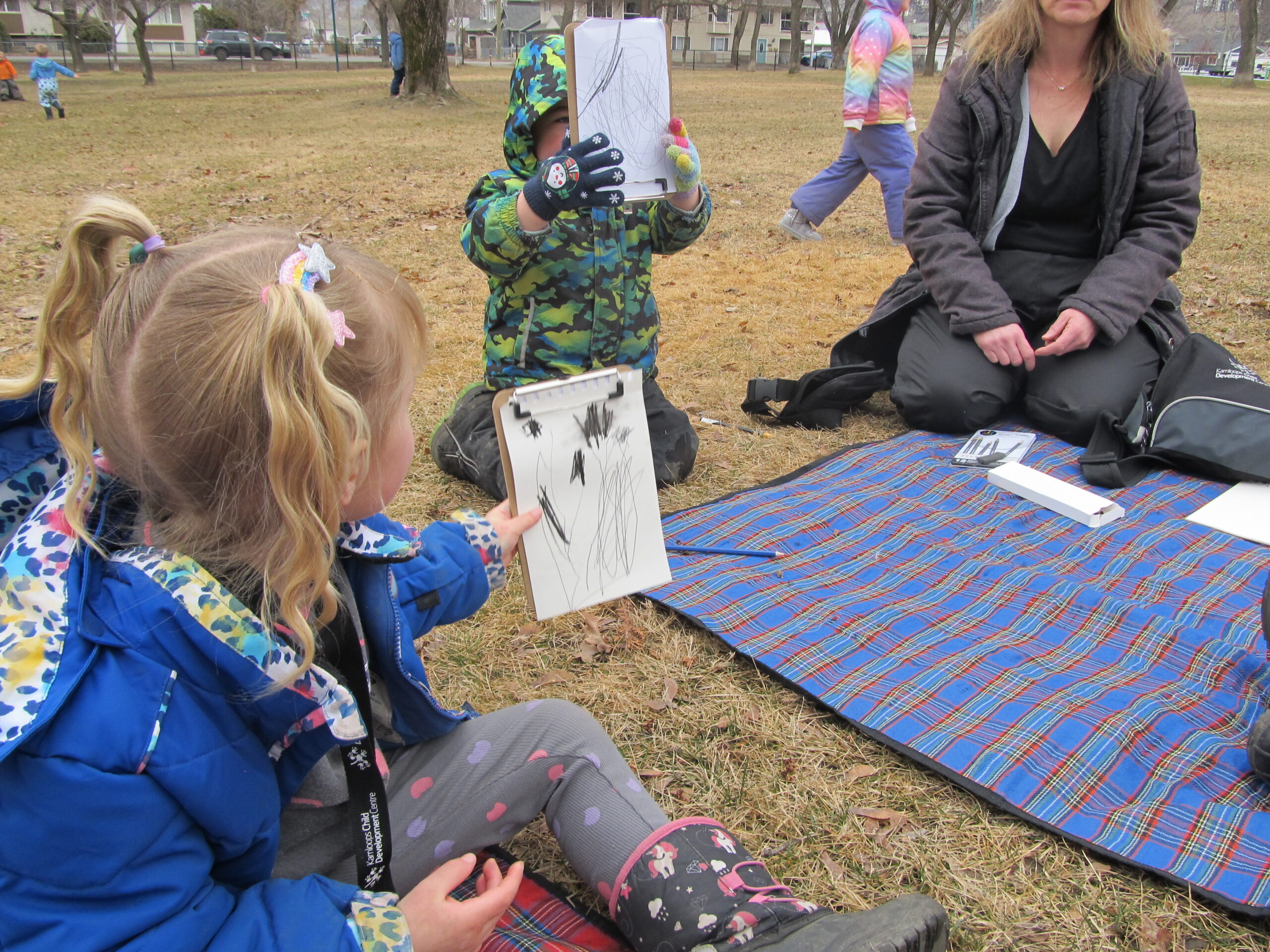
On this day we went to the park to do some drawing and other things. There wasn’t an intention set before the children started drawing. There were maps drawn, and one child drew a bird nest.
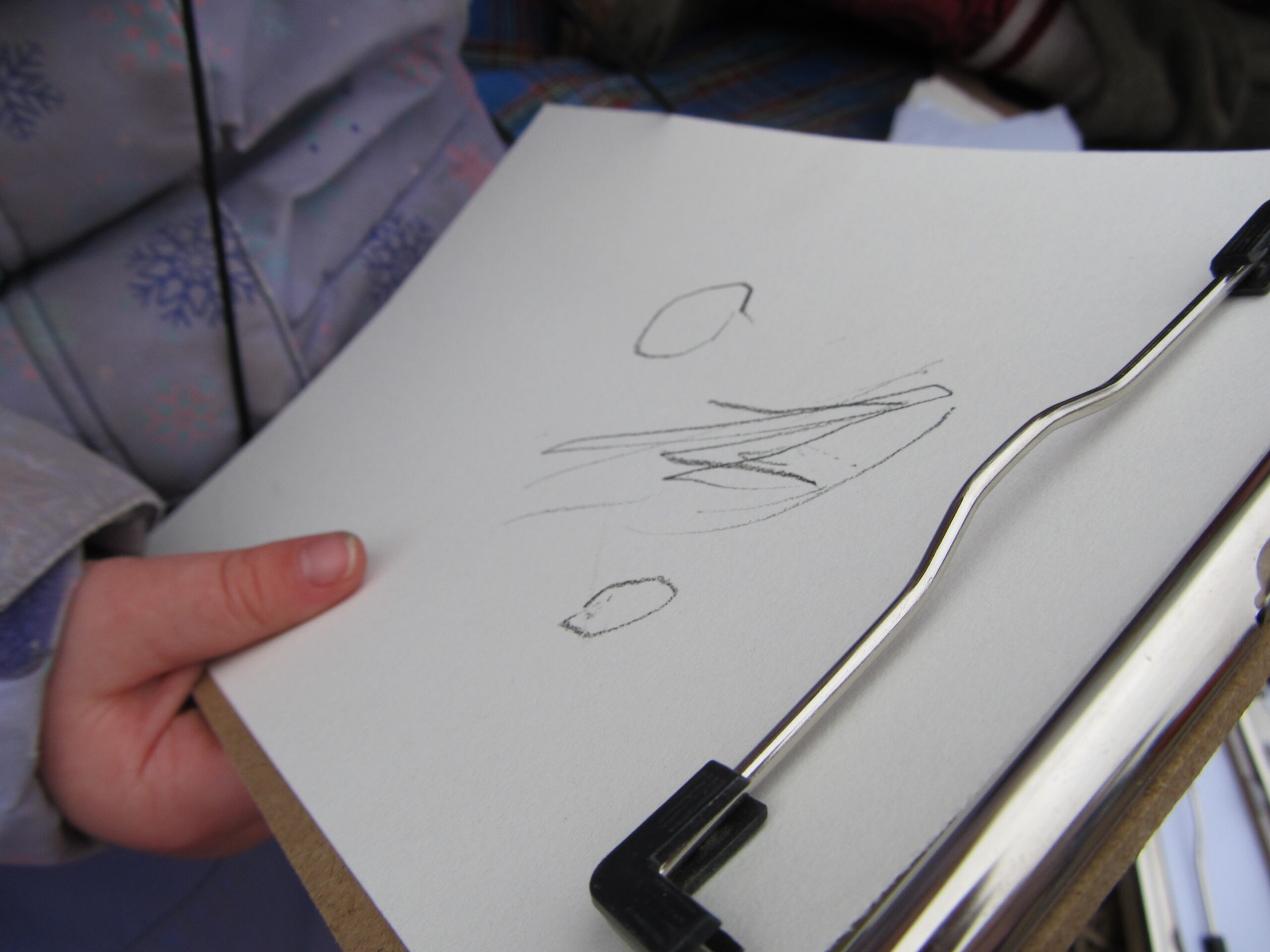
There were other activities being done at the same time. There were binoculars for children to use and look around with; they love to use these at the park and search for birds and nests in the trees.
Later in the afternoon, I brought some materials outside into the yard to do a bit of an experiment. I brought small, factory-made bird nests, water, and a tray. I poured the water on the tray and placed the nests in the water to see if they would float. The children outside were intrigued to see if the nest floated or not. These nests didn’t float, but the small plastic eggs that came with them did.
{side note: I broke my foot a few days ago, so I am still working on gathering materials for the nest building activity}
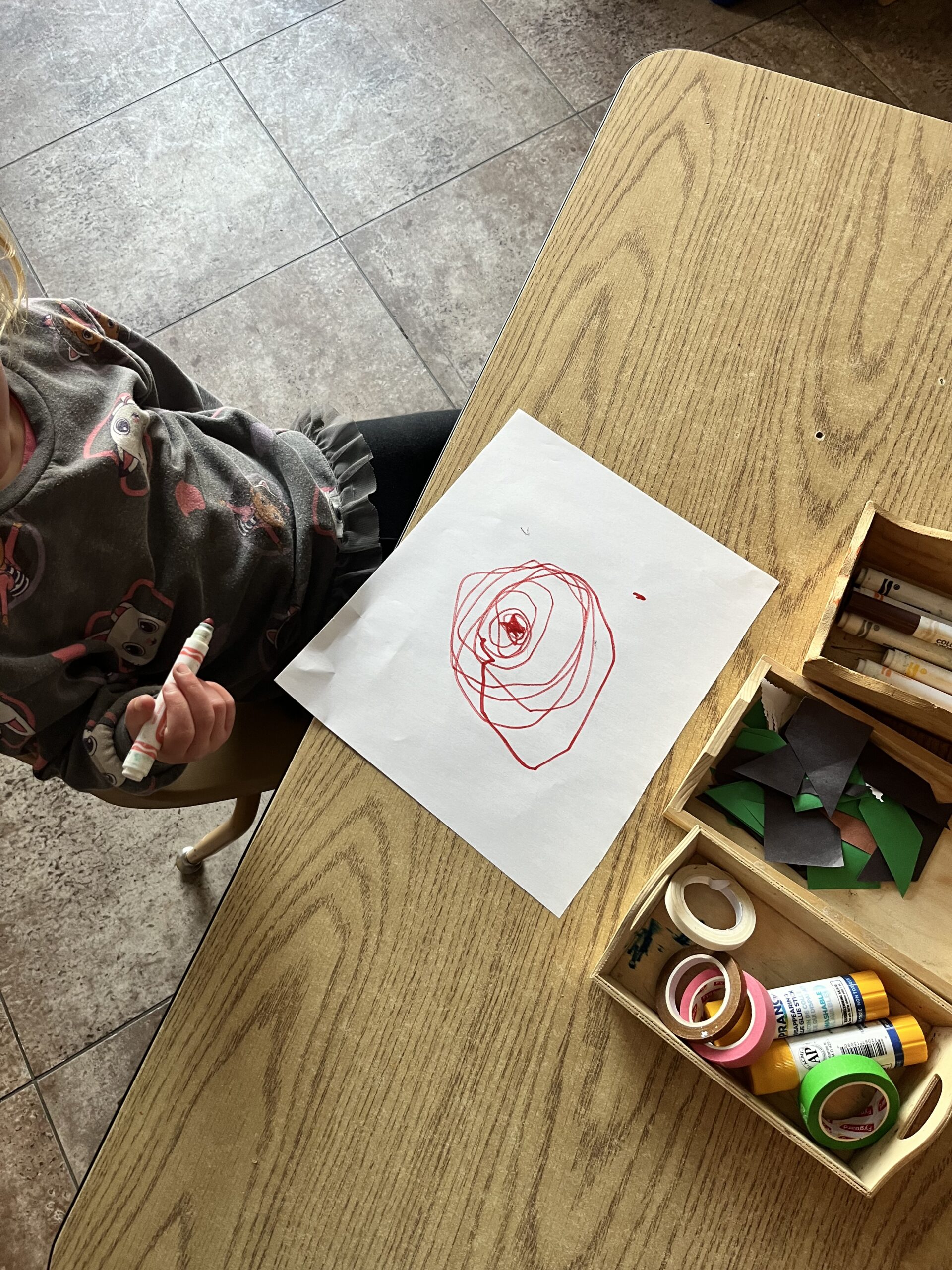
At the end of the day, one child began drawing by themself and showed me her drawing and said it was a bird nest for a candy cane bird. I pre-emptively asked this child what she thought a bird nest needs. She told me the nest would need aves, dirt, trees, and banana peels. The banana peels would be used as a barrier/trap so that other people slip and fall on the banana peels and won’t be able to get into the nest.
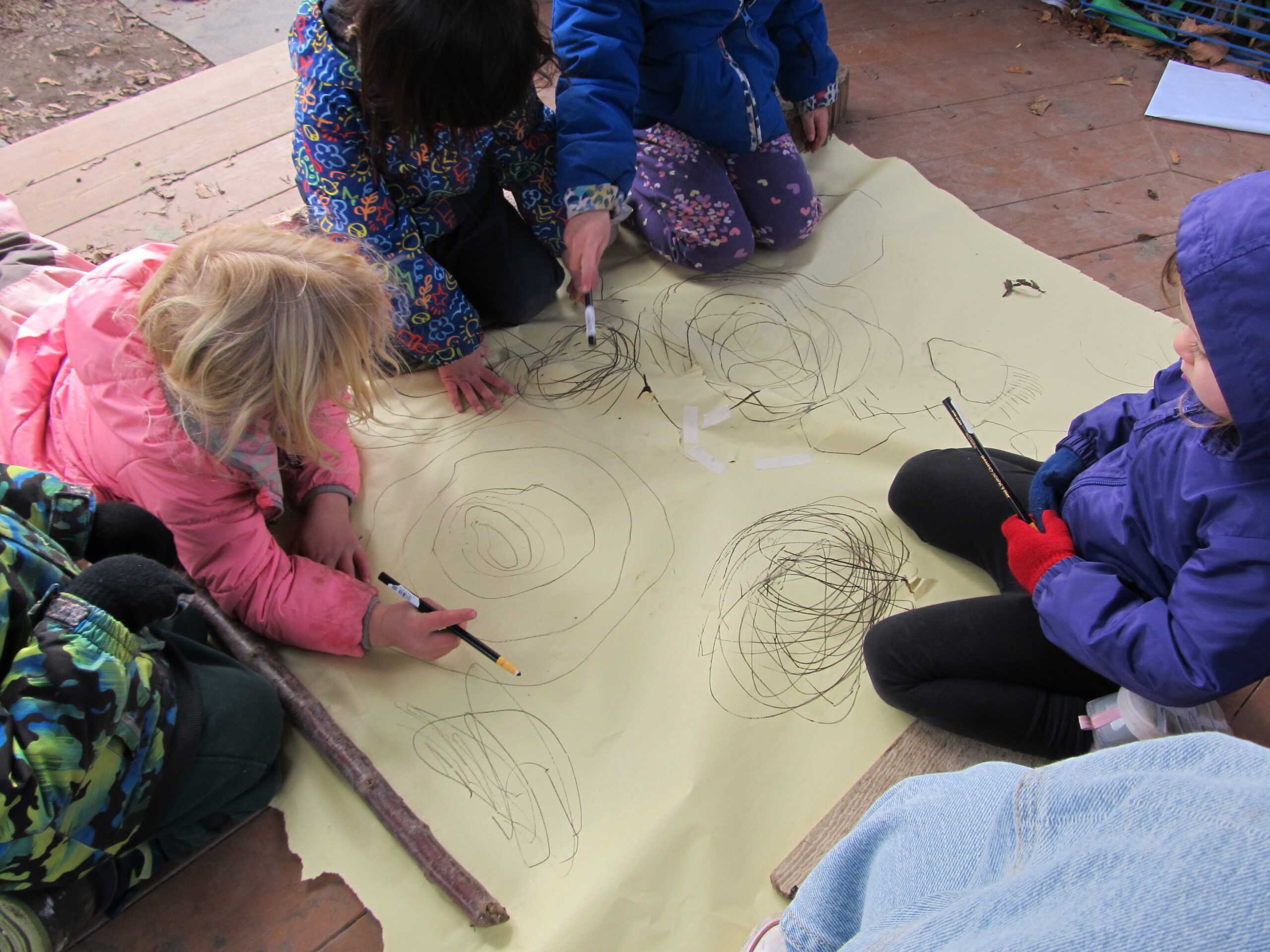
When outside the next day, I brought out some materials to draw with: charcoal pencils and a large sheet of paper. I had five children gather around, wanting to draw. I asked the children to draw me a big bird nest, hoping the children would draw a giant one collectively, but unfortunately, the children all drew their own nests. While drawing, I asked questions about what materials they think they would need to build a human bird nest.
A: This is the biggest bird nest!
Myself: The biggest bird nest? Can you make it big enough so that you can sit in it? … A, yesterday we were talking about what we would need to build a bird nest.
A: Sticks.
Myself: You said sticks,
A: Banana peels, so nobody comes in ours, they would slip, and then we got sticks, banana peels.
Myself: Yesterday, you said dirt and trees…
A: Dirt.
Myself: Is there anything else?
A: Bugs.
Myself: Bugs? You think we need bugs in our bird nest?
A: Bugs, bugs, bugs.
Myself: What else, A? What would make it comfy? Could we use a blanket in it?
A: Yeah!
Myself: E, if you were to make a bird nest for yourself, what would you want in your bird nest?
E: Umm… Eggs!
Myself: You want eggs? What about something soft, like feathers?
E: Hmm…
Myself: Would you want a pillow?
E: I want a pillow and, and, and umm… a blanket. To lay in.
The big nest drawing outside didn’t go as well as planned because it was windy, and the paper would not stay still. Also, the children pressed very hard on the charcoal pencils on the ground and ripped the paper. This time, I taped a large piece of paper onto the top of a table in the classroom and gathered a few children around to draw a big bird nest. The children still did not collectively draw one big nest, but I had a few different children drawing with me today.
Myself: So, sorry, you want to make it with a bird or for a bird?
J: For a bird.
Myself: You’re gonna make it for a bird.
Well, what if I wanted to make a bird nest that would fit you in it? What do I need? I think I need, like, really big sticks.
J: Oh. Yeah? I can make it and make it as big as the table, probably.
Myself: Mm hmm.
J: Okay.
Myself: That’s what I want to do.
But I need your help and how to make it. So I need you to draw it for me to show me how to do it. What’s that?
That the bird?
J: Yeah.
Myself: Yeah.
What would we use to make it? What do you think?
J: Um…
Myself: So what do I need to make the bird nest? Like, if I were to make it for you, what would you want to make your bird nest?
J: I don’t, I don’t, I don’t.
Myself: You don’t know. You really don’t know? Would you make it with a bunch of branches and sticks?
J: Yeah, because it’s pretty…
Myself: Would you still use leaves?
J: Yes.
Myself: Yeah?
J: Yeah.
Myself: What else? What about grass? You put grass in it?
J: Yeah.
L: I put the sky in it.
Myself: You put the sky in it?
Yeah? I don’t know how to do that. Then what?
How would you make it comfy for yourself?
J: Put some inside it, too.
Myself: Yeah, so what, what, inside?
L: I know what go in a nest, eggs!
Myself: Eggs?
Yes, eggs do go in a nest.
J But, but do you still…? Come out of the mummies. They’re gonna come out of Mommy, their mummies.
Myself: Birds come out of their mummies.
L: Yeah, and dadas.
J: No, the dada… puts the baby in the tummy? So, who the daddy give the, the, the, the, the, the, the mommy a baby?
Myself: Okay. And that’s how birds do it?
J: Yeah.
L: No, they don’t, though.
Myself: No, they don’t? How do they do it, then?
L: Oh, the boys. They hunt for food.
Myself: They just hunt for food?
Are those all the sticks? Or grass? What is it?
J: Sticks.
Myself: It sticks. How do you think a bird makes a bird nest with no hands?
J: Hands?
Myself: They don’t have hands. They have wings, but they don’t have hands. So how do they make the bird nest?
J: points to teeth
Myself: Their teeth?
J: Yeah.
Myself: Yeah?
What about their feet? Do you think they use their feet, like hands?
J: No.
Myself: No? They just use their teeth?
L: Hi.
Myself: Hi.
L: Birds don’t have teeth.
Myself: Birds don’t have teeth?
A: Can I colour on here, please?
Myself: We’re drawing a big bird’s nest, like we did yesterday.
A: I want to draw a bigger one.
Myself: You want to draw a bigger one?
A: Yeah. I want to do it bigger. Wait, here?
Myself: Sure. You can go on top if you want.
Yep. Sure. ya. Add to it.
A: That’s a feather.
You just let me draw, draw, draw, draw, draw.
Myself: So A, you had a lot of ideas for what to put in a bird nest.
A: Feathers
Myself: Feathers?
A: Mm hmm. I mean, leaf, fetters, and fernessa’s… looting.
I mean, I mean… banana peels.
Myself: Yeah, you keep saying banana peels. Do you think, like, orange peels could work instead?
A: Yeah.
Myself: Yeah?
A: Look, this is the feather, and that’s the bird.
Myself: Okay. What about apple peels, would apple peels work, too? \
A: Yeah.
Myself: Yeah?
I wanted to try this again, but inside, because it was really windy outside, and the paper ripped a lot. So I wanted to try it again. And I wanted to try it this way.
A: These are all the birds.
Myself: These are the birds.
Okay, let me try.
A: That’s the medium-sized one that I brought… Dip, dip, dip, dip, dip, dip, dip, dip. Who did this? Is it about my name?
Myself: Just your name beside it.
N: What are you doing?
Myself: We’re drawing bird nets.
You want to draw a bird’s nest?
A: These are all my birds.
N: Yeah.
Myself: Come over here. Come to this side.
How are you gonna draw it?
A: These are all the birds.
Myself: Those are all the birds? Okay.
How are you gonna draw it, N?
N: inaudible
Myself: On the bike?
N: With a biker.
Myself: The biker?
N: Yeah.
Myself: Yeah?
The biker found a nest?
N: Yeah
A: That, that’s a bird, like.
Myself: That’s a bird too?
A: Uh, uh,
Myself: You wanna fly, too?
N: Yeah.
Myself: That’d be really cool if you could fly. Look there’s a bird. Bird. Bird. Are those all your birds or are those all your eggs?
A: Where is your bird?
Who’s this? That, that does not even look like a bird. It looks like it’s a stick.
Myself: It’s my kind of bird.
A: Do you know all my birds?
Myself: N, what are you drawing?
A: These are my books.
N: I got a baby be be be bird.
Myself: The baby big birds?
N: No… inaudible um, I want both.. I want both.
Myself: You want both?
N: Yeah
Myself: You want boats or both?
N: Both.
Myself: Both.
A: Um, this is these are all the birds.
Myself: Those are all the birds. Do you think it’s easy or hard to build a bird nest?
N: Why?
A: That’s a, that’s a little bit nest.
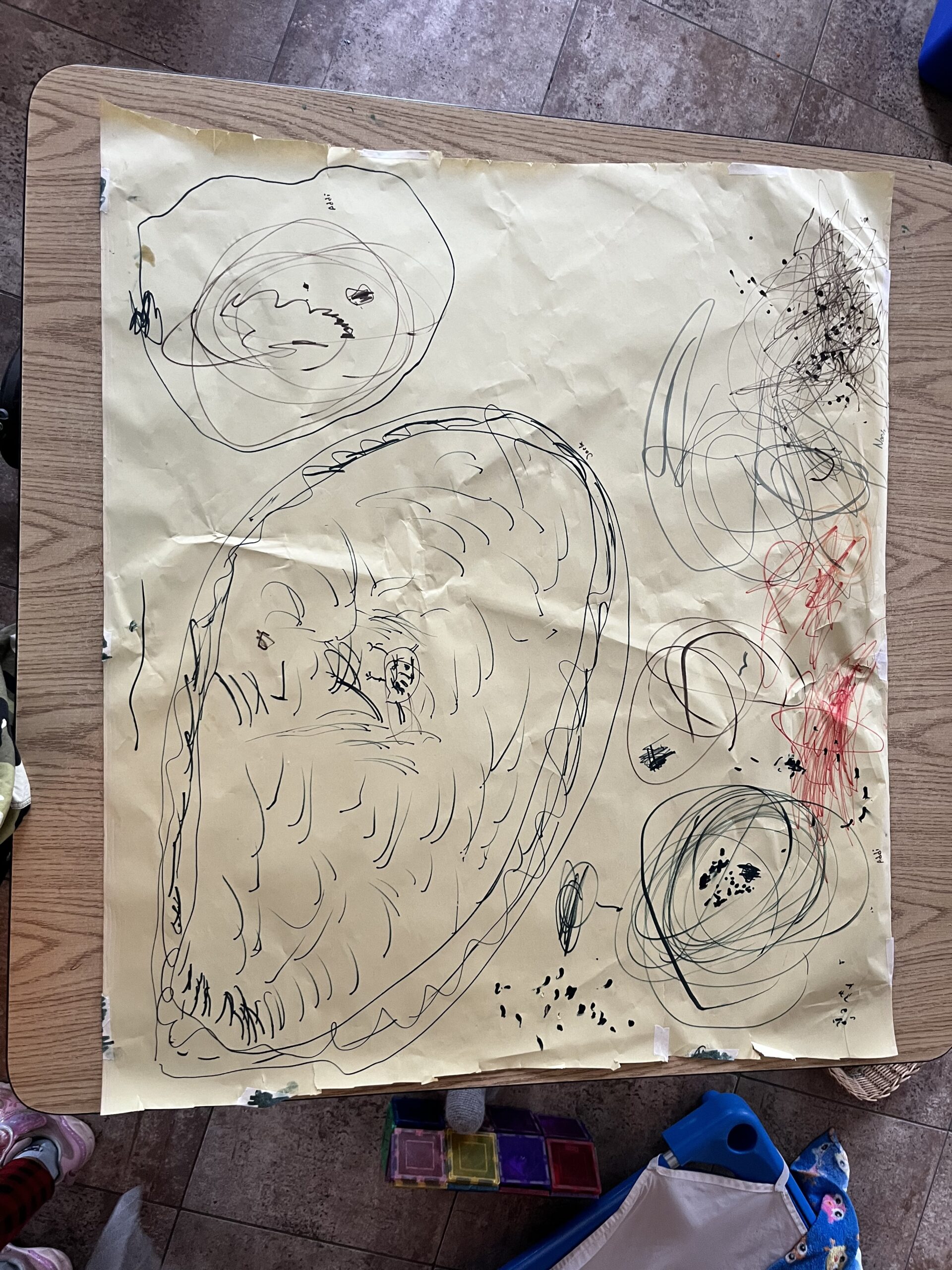
While drawing yesterday, one of the educators was going through all of the books in the classroom. She came across a book about worms. This prompted J to tell me that woodpeckers eat wood, and other birds eat worms. He didn’t expand on that, and unfortunately, I didn’t ask anything else about it.
J and I were drawing again this morning when M joined us and drew an egg (I was colouring an Easter Egg I drew) and then drew a nest on top of the egg. We also did some drawing outside, intending to draw birds and bird nests, as there were photos spread out around the table along with the pencils, papers, and clipboards.
J comes in in the morning and comes right over to me to ask to draw (like yesterday). They told me they didn’t draw much before we started drawing together, and they said they didn’t draw at home either. After the first day of drawing with this child, they went home and drew at home with members of their family. They came in the next day and showed me what they had drawn as soon as they walked in the door. I also brought the drawing stuff outside again, and I had other children from various classrooms come and draw with me. Some of these children were more interested in the colours I brought with me this time, rather than creating something or giving it a name/label.
J is a child I struggled to form a relationship with at first. I was able to do so by drawing with him and interacting with him when exploring LEGO and magnet tiles. This is key to building a positive relationship with the child and the family. This aligns with “relationships are the context for well-being and learning” from the BC ELF.
J is very methodical and logical when it comes to drawing. He doesn’t just draw on paper at random; he needs an idea of what he is drawing and an idea of what it looks like to draw it. He doesn’t try drawing when he doesn’t know what to draw, or he will “draw something,” but he “doesn’t know what it is.” He was practicing his name and experimenting with sizes. He wrote his name in giant letters, medium letters, and small letters.
On our third walk, we saw tumbleweeds floating in the river. A and H suggested they were nests floating in the river. J went to correct them, saying they’re actually from trees, and M stated that they were crocodiles.
saw tumbleweeds in the river
Myself: What do you think those are?
A & H: It’s a nest
J: No, they’re from a tree
M: It’s a crocodile!
E: Look, those are birds!
N: No, they’re ducks.
Myself: Are ducks birds?
no answer
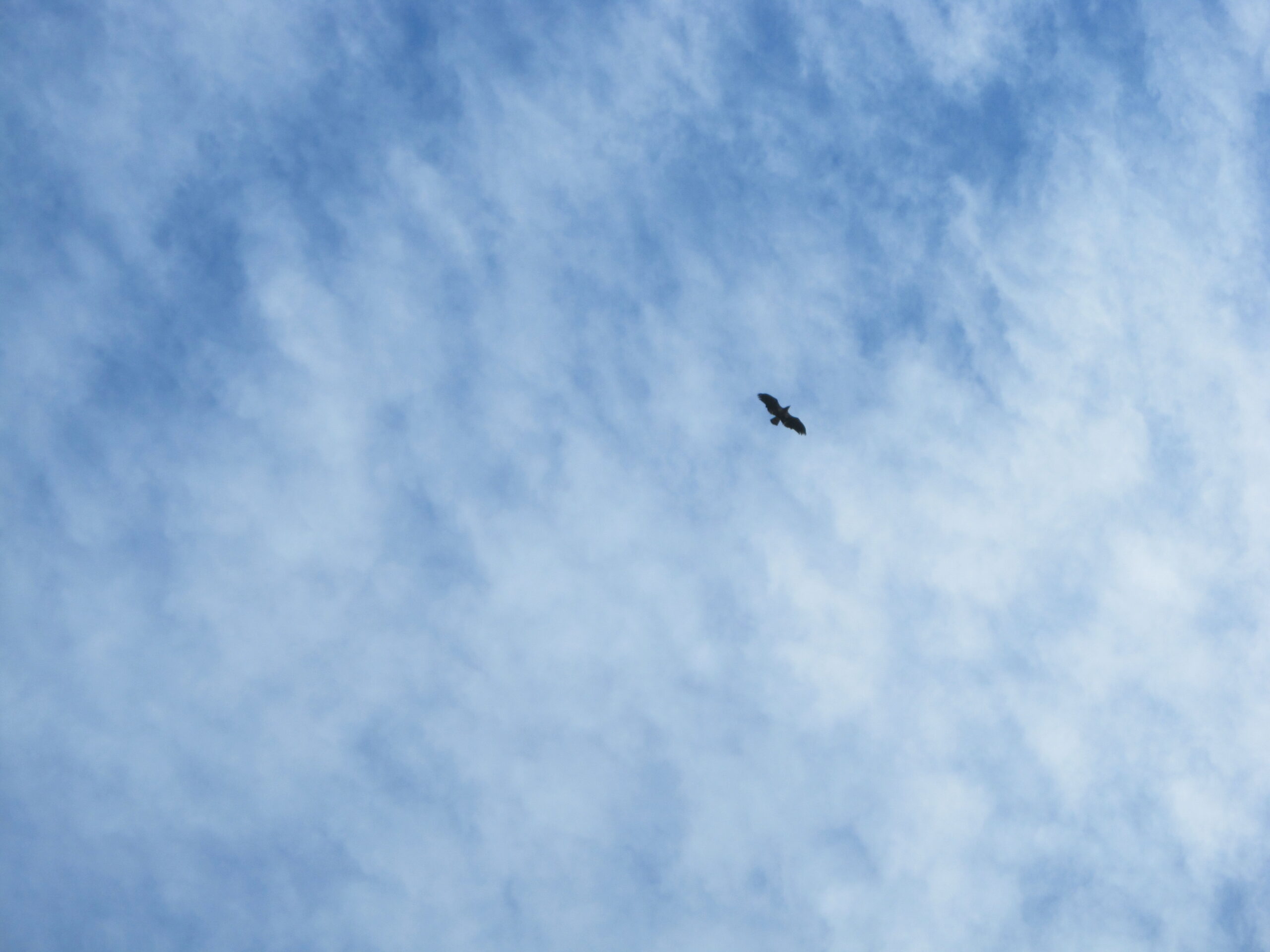
Eagles started curling high above us. My mentor asked the children what she thought they were doing. N suggested they were playing, and Jp suggested that they were playing tag.
Educator 1: Look at those birds flying way up high above us. What do you think they are doing?
N: They’re playing
Jp: I think they’re playing tag.
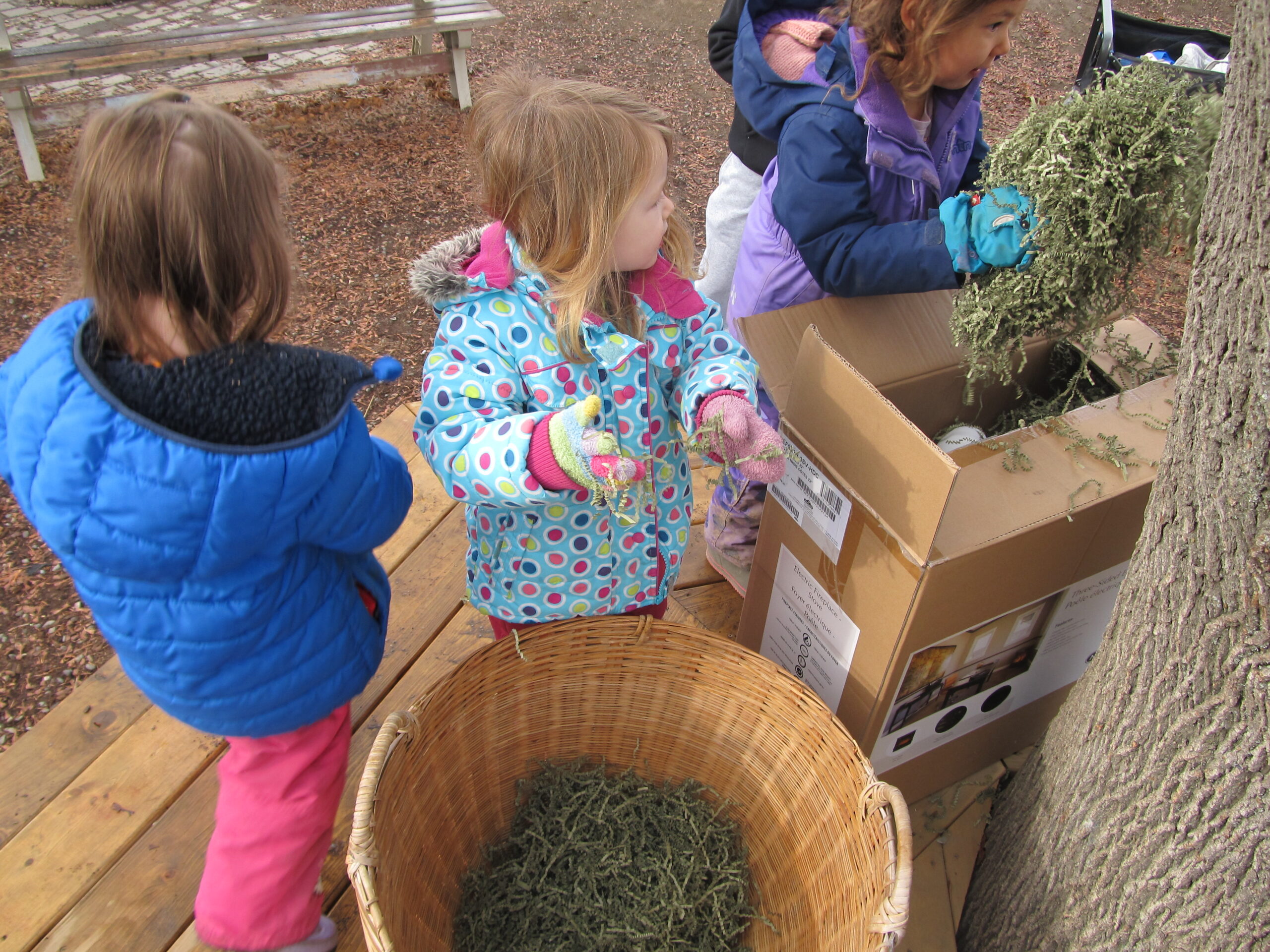
I gathered materials that would mimic a big nest that a child could fit into and brought them to the daycare. First, I brought the materials outside, in the yard. I had some children assist me in setting up the nest, and then a few children got a turn to sit in the nest. The children who were interested in the outside exploration were not from the bird nest classroom, so I wanted to try again in the classroom.
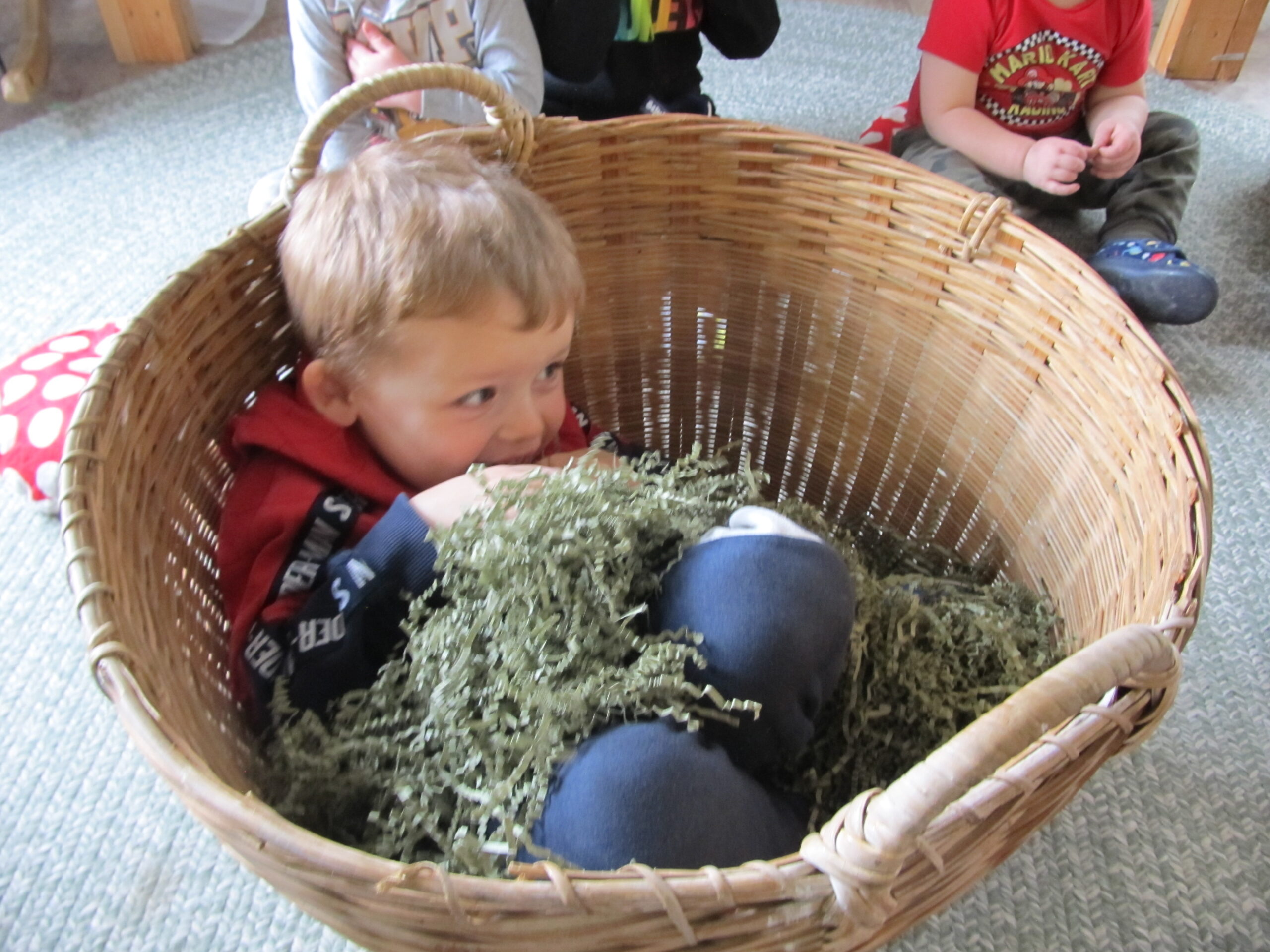
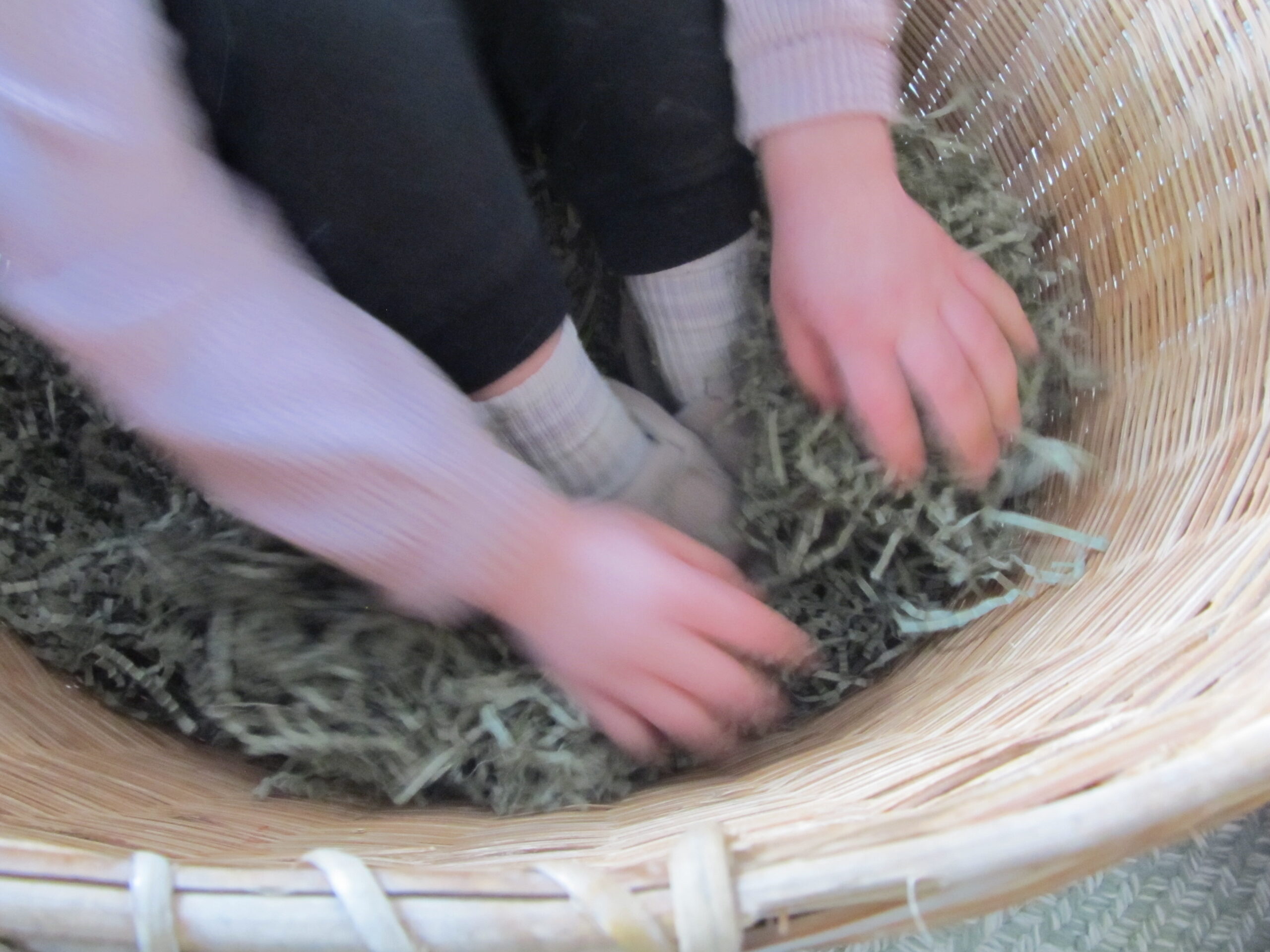
I brought the nest materials back inside and set it up as a circle time activity. I recorded the audio while the children each had a turn sitting in the nest.
Myself: How about this here? What do we think this is?
All: A nest.
Myself: So, what do you guys think this stuff is? It could be grass or moss.
-It’s grass.
Myself: Grass? Do you think this is similar to what birds make their nests out of?
-Yeah.
-No.
-No, no, no.
-Yeah, yeah, yeah, yeah, yeah.
Myself: Okay. The next thing I wanted to do with everybody is… who wants to sit in it? Does anyone want to sit in it? Do you want to see what it feels like to be in a bird’s nest?
All: Yeah.
Myself: Okay, J, you’re sitting very nicely. Why don’t you try first? Is that what a nest feels like?
J: Kind of.
Myself: Do you think it’s a little different? How do you think it would be different?
J: Because it’s not real grass.
Myself: Because that’s not real grass? Is this a real nest?
J: No.
Myself: You’re right. It’s not. But do you think it’s similar?
J: Yeah.
inaudible for 3 mins
Myself: How’s it goin’ in there, H? What does it feel like?
H: Feels like grass.
Myself: Yeah?
inaudible
Myself: What are your thoughts? Do you think this would be comfy enough?
Jp: Yeah.
Myself: Yeah? Comfy for you? (8:04)
A: I want to sleep in it.
Myself: You want to sleep in it? Should I leave it here for you guys? Should we keep it?
All: Yeah!
Myself: We’ll ask Educator 1 and Educator 2 where a good place to save it would be.
Jp: I’m going to leave the egg in there.
Myself: Okay. Hey, A, your turn.
So you want to sleep in here? I got you. It’s a little wobbly, right? Do you think our real nest is that wobbly? Do you think it’s this wobbly?
A: Whoa, whoa, whoa.
Myself: How big of an egg do you think would be sitting inside a nest if the nest were this big? Do you think the eggs would be bigger than that?
K: Yeah
Myself: Yeah? I think you’re the perfect egg size. Do you think the egg would be as big as you if it were living in this nest?
E: No.
Myself: No? How big would it be?
E: This big. [holds arms out wide] This feels comfy.
Myself: Does that feel comfy? That’s good. I was trying to make it feel comfy.
Myself: Are you a little bird? Are you an egg or a bird?
W: Daddy.
Myself: Daddy? Are you an egg or a bird?
W: Daddy.
Myself: Are you a bird?
W: No.
Myself: Are you an egg?
W: No.
Myself: Are you daddy?
W: Yeah!
Myself: Okay, we’ve got a couple more friends. Is it N’s turn? Are you an egg? Are you an egg or a bird?
N: I’m a big bird.
Myself: You’re a big bird?
N nods
After the activity was all done, I asked some of the children their thoughts on the nest.
E said, “The egg was smooth and looked real.”
J said, “I was a chicky bock bock” with a big smile.
Jp said he liked it.
K said she “felt like a baby bunny”.
A said, “The eggs that were in the nest. I like the eggs because there should be chicky bock bocks in there.
H said. “I felt like a turtle, a bird, and an egg.”
Most, if not all, the children are connecting the nest to eggs. Eggs live in nests, which have grown from where birds lived and slept in nests. The next pedagogical narration inquiry could dive into the life cycle of a bird, showing that eggs are laid, birds hatch and grow, and then repeat.